
You don't need a cupboard full of expensive manipulatives to teach great maths. Chances are you already have one of the best maths resources sitting in a drawer somewhere: a deck of playing cards or a UNO pack.
Cards are cheap, portable, endlessly reusable, and — best of all — kids don't see them as "schoolwork." They just see a game. That makes them brilliant for homeschooling families who want effective, low-prep learning without a big spend on kits and worksheets.
Here are five of my favourite simple card-based activities to build real maths skills at primary level.
# 1. Rainbow Numbers (Number bonds/ Rainbow numbers) *You’ll need a dice or a way to choose numbers from 0 to 10 and a sheet of paper with the numbers 0 to 10 written on it.
Split a deck between two players, take it in turns to throw a 10-sided dice and then each player crosses out its number bond to 10 on their page e.g.: if a player throws an 8, they need to calculate how many more they need to make 10, which in this instance is 2. They then cross the 2 off on their page. It's a classic for a reason — it builds number bond fact recognition which is used in numbers of all values as they become more skilled and best of all - without a single worksheet in sight! You can make this more challenging by upping the number bond to a higher decade such as 20, 30 and so on. Don’t have any dice? You can write numbers on slips of paper to be drawn from a hat or a digital random number generator are two quick and easy alternatives.
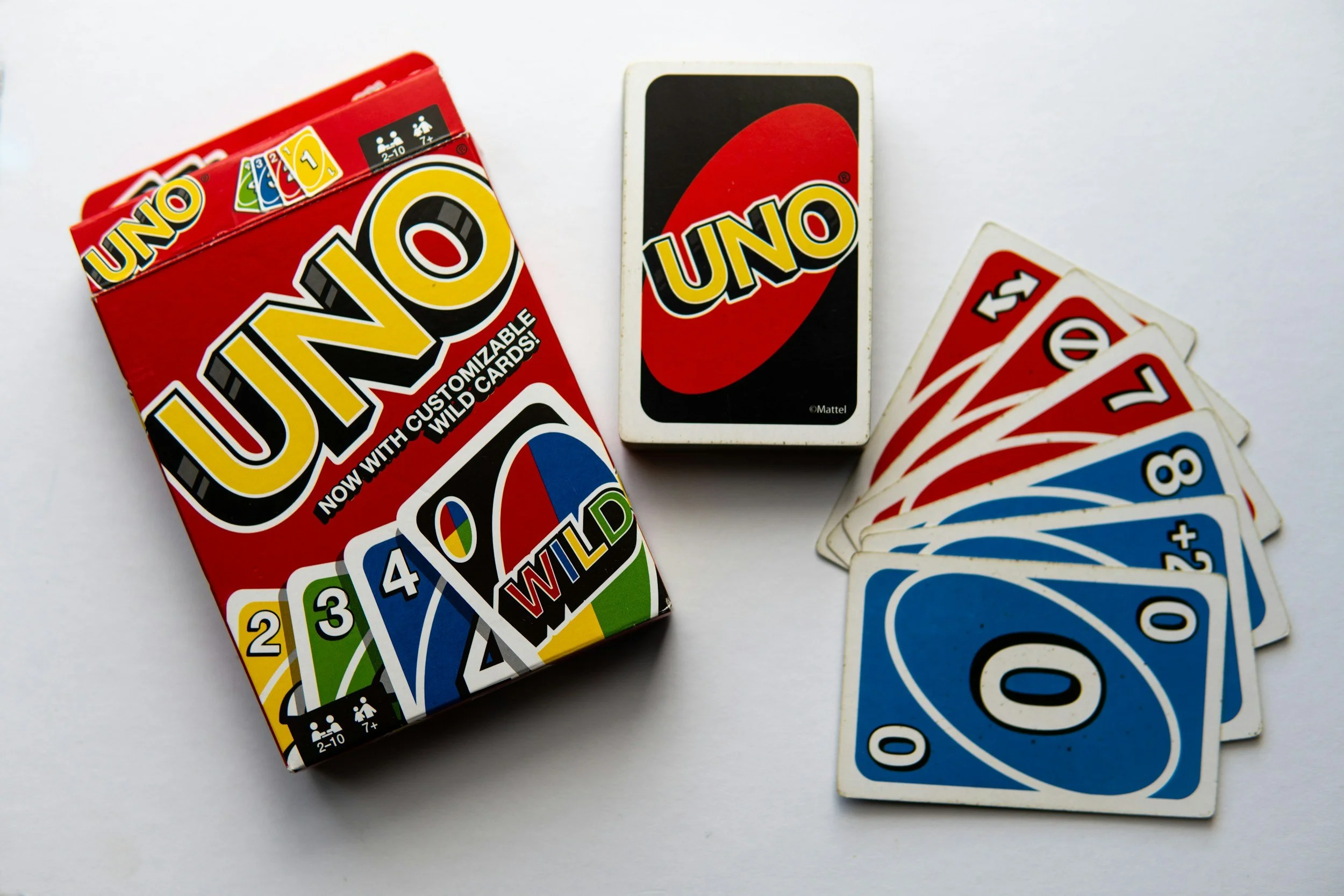
Everyday household playing cards or UNO cards are all you need to make maths fun!
# 2. Snap Addition (Number bonds and mental math recall)
Player one flips two cards at once and then both players race to call out the total of the two cards added together before the other player does. This turns number bonds practice into a fast-paced game, and it's brilliant for building fluency with number facts. UNO cards work particularly well here since the numbers are big, bold, and easy to read when speed is the name of the game. To increase the fun factor you can use a game board with tokens to see who wins overall.
# 3. Trash (Ordering and subitising)
Each player is dealt 10 cards which are arranged face down in two rows of five. The rest of the deck is placed in the middle of the table. Player one takes a card from the deck and replaces the card currently sitting in that number’s position (top row is one to five with the bottom row being six to ten). If the card they pick up is one they need, they can place that in the correct spot and pick up the card currently there. This continues until the player no longer has a card in their hand that they need. The first player to have all ten numbers facing up in order is the winner. This is a hands-on way to reinforce ordering, subitising, and the language of "more than," "less than," and "equal to."
# 4. Build a Number (Place value and operations)
Working with your child’s ability, deal out two, three, four (or more) cards and challenge your child to arrange them to make the largest possible number, then the smallest. You can have a range of challenges such as What do all of your cards add up to? Can you use your cards to make 100? (hint: using any of the operations of addition, subtraction, multiplication and division - or whatever they are confident using) Make an odd number. Make an even number - the possibilities are endless! If you’re using a deck of playing cards, aces count as 1 and face cards as tens. This activity is a fantastic, no-prep way to explore place value and get kids thinking about the value of digits relating to their position within the number.
# 5. Multiplication War (Times tables)
A twist on the classic — with half the deck each, player one flips two cards over and multiplies them together. Player two does the same and the player with the highest product wins the round - keeping all of the cards from that round. The winner is the player who has all of the cards. It's a fun, low-pressure way to drill times tables, and you can easily dial the difficulty up or down by choosing which number cards go into the deck. Alternatively, if you want to focus on a particular times table, place that number card on the table e.g.: a two and then have each player flip only one card which they then times by the two every hand. Same rules with a more focused learning objective.
The real lesson: Less stuff, more earning
The beauty of using cards for maths is that the equipment barely matters — the thinking is what counts. A ten-minute round of Snap addition at the kitchen table can do more for number fluency than a stack of printables, and it costs nothing beyond a pack of cards you probably already own.
If you're homeschooling and feeling like you need to buy "proper" maths resources, take this as your permission slip: shuffle the deck, deal a hand, and let the learning happen.